

What makes a corporate event memorable? It is the combination of engaging keynotes, effective networking, and flawless execution. Corporate events provide strategic opportunities to communicate company vision, inspire employees, strengthen client relationships, and achieve measurable business goals. When hosting conferences, product launches, or team-building activities, success relies on rigorous planning and professional execution.
Marquee XP transforms advanced ideas into seamless, engaging experiences that leave a lasting impact on every attendee.
What Corporate Event Planners Do & Key Roles
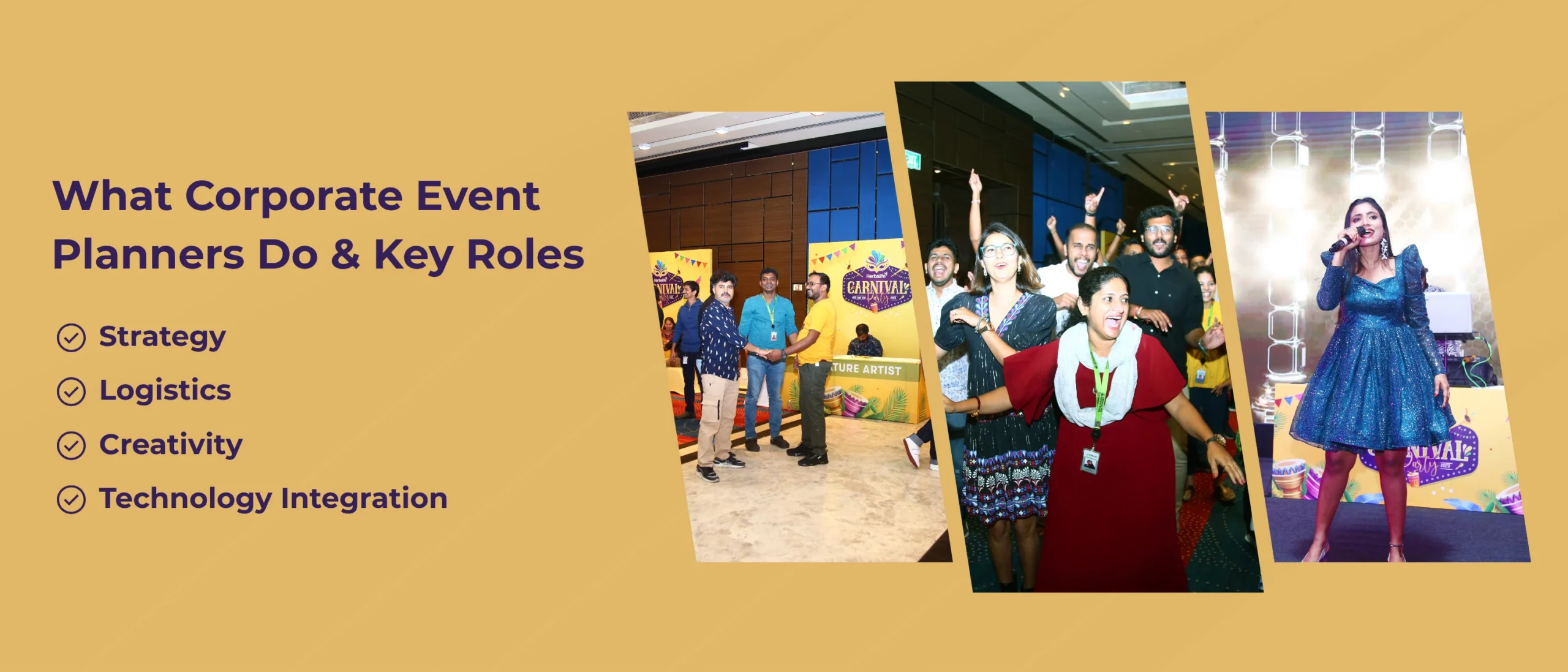
Corporate event planners drive effortless event execution. They manage events from start to finish, ensuring every detail aligns with the overall vision. Their expertise includes creativity, logistics, and technology. Core responsibilities include:
- Strategy: Determining clear objectives and quantifiable targets for each event.
- Logistics: Coordinating venues, vendors, travel, and on-site operations.
- Creativity: Designing hands-on sessions, unique networking opportunities, themed decor, and immersive activities that interest attendees and reflect brand identity.
- Technology Integration: Leveraging event management platforms, apps, and analytics for hybrid or remote events.
Types of Corporate Events

Corporate events differ in scale, purpose, and audience. Each type requires specific planning considerations:
- Conferences & Summits: Thought leadership events that build credibility and networking opportunities.
- Product Launches: High-impact showcases that require flawless execution to generate market buzz.
- Trade Shows & Exhibitions: Platforms to engage prospects, partners, and industry influencers.
- Internal Events & Corporate Meetings: Team-building, training, or annual meetings designed to promote collaboration.
- Experiential & CSR-focused Events: Hands-on experiences and socially responsible initiatives that improve brand reputation and employee engagement.
Identifying the event type enables planners to formulate tailored, engaging, and effective experiences.
Step-by-Step Planning Process
Detailed planning is essential for successful corporate events. A planned approach includes:
- Defining Objectives & Success Metrics: Establish SMART goals—specific, measurable, achievable, relevant, and time-bound. Align all stakeholders and teams to these objectives.
- Budget Allocation & Resource Management: Categorize costs for venue, catering, AV, marketing, and contingencies. Work with pre-screened vendors and retain accurate budgets to prevent overspending and ensure quality.
- Venue Selection & Experience Design: Select venues that correspond with the event’s purpose, capacity, and technology needs. Enhance attendee experience with themed decor, interactive meetings, and networking opportunities.
- Vendor Liaison & Logistics: Work with reliable vendors, establish fixed timelines, and put in place contingency plans to avert last-minute issues.
- Marketing, Promotion & Audience Engagement: Use email campaigns, social media, and event apps to encourage interaction. Incorporate gamification, polls, and Q&A sessions to raise engagement.
- On-Site Execution & Real-Time Management: Conduct rehearsals for AV setups, workflows, and crisis procedures. Ensure flawless operations with dedicated coordinators and clear communication, and attendee satisfaction. Apply insights to boost future events.
Best Practices, Dos & Don’ts
Dos:
- Set well-defined objectives and a detailed budget.
- Know your audience and customize experiences accordingly.
- Start planning early and create an extensive timeline.
- Utilize technology for engagement and output.
- Give priority to accessibility, inclusion, and safety.
- Conduct post-event evaluations to improve upcoming strategies.
Don’ts:
- Don’t neglect budget, logistics, or audience choices.
- Avoid choosing venues solely for aesthetics.
- Don’t leave planning to the last minute or overload schedules.
- Don’t ignore technology, communication, or contingency planning.
- Avoid skipping post-event follow-up.
Conforming to these best practices guarantees corporate events are influential, seamless, and memorable.
Common Challenges & How to Overcome Them

Corporate events commonly involve complex logistics and multiple stakeholders. Principal challenges include:
- Budget Constraints: Optimize vendor selection and allocate backup funds.
- Logistical Complexity: Maintain explicit timelines, coordinate with vendors, and manage rehearsal schedules.
- Stakeholder Alignment: Maintain candid communication channels and proactively manage expectations.
- Online Participation: Use reliable technology platforms, hands-on sessions, and gamification to improve participation.
By foreseeing challenges, planners can implement strategies that reduce risks and improve outcomes.
Technology & Innovation in Event Planning
Modern corporate events rely on technology. Planners can use electronic platforms to:
- Streamline registration, ticketing, and communication.
- Facilitate hybrid and virtual experiences with real-time interaction analytics.
- Track attendee behavior to generate effective insights.
Technology enables Professional Event Managers to deliver seamless, interactive experiences and accurately measure event success.
Future of Corporate Event Planning
The future of corporate event planning is data-driven, digital, and highly personalized. Emerging trends include:
- AI-powered analytics for attendee engagement and customized experiences.
- Increased hybrid and online events for global access.
- Gamification and interactive formats to optimize participation.
- Sustainability and socially responsible initiatives are integrated into event design.
Planners who embrace these trends will be best positioned to create impactful, measurable events that also connect with employees, clients, and stakeholders.
Conclusion
Corporate event planning is simultaneously an art and a science. Hiring professional Event Managers helps organizations ensure flawless execution, measurable ROI, and memorable experiences. From defining objectives and budgeting to implementing technology and measuring success, every step matters.
Whether you are planning a high-profile conference, a product launch, or an internal team-building event, a planned approach and experienced guidance make all the difference. Partner with skilled planners or adopt these best practices to create events that engage, inspire, and provide tangible business outcomes.
For organizations ready to achieve impactful corporate events, start by applying a structured, planned approach today, then transform every gathering into a measurable success.
Frequently Asked Questions (FAQs)
What should I look for when hiring Corporate Event Planners for a large‑scale event?
Look for experience with similar event types, a strong vendor network, technology and hybrid-event expertise, a clear planning framework, and proven success with measurable outcomes.
How do Professional Event Managers help optimize event ROI?
Planners optimize ROI through targeted audience engagement strategies, careful budget allocation, data-driven decision-making, maximizing sponsorship and partnership opportunities, and aligning event goals with business outcomes.
What questions should I ask Professional Event Managers during the initial consultation?
Ask about their process for setting objectives, managing logistics, measuring success metrics, handling risk and contingency planning, and how they incorporate technology and attendee personalization.
How far in advance should we engage Professional Event Managers?
For most corporate events, especially large or hybrid ones, engaging planners 3–6 months in advance allows adequate time for concepting, vendor sourcing, marketing, rehearsals, and tech setup.
Can Professional Event Managers manage hybrid or virtual events effectively?
Yes—experienced planners leverage event platforms, mobile apps, livestreaming tech, and engagement analytics to ensure virtual and hybrid components run seamlessly alongside in‑person sessions.
What metrics do Professional Event Managers use to measure event success?
Common metrics include registration numbers, session engagement, lead quality, attendee satisfaction scores, networking interactions, social media activity, and post‑event follow‑up conversion rates.
How do Professional Event Managers personalize experiences for diverse attendee groups?
Planners use data segmentation, attendee surveys, session tracking, mobile app preferences, and persona mapping to tailor content, networking paths, and engagement opportunities for different audience segments.
What role do Professional Event Managers play in risk and contingency management?
They build detailed risk assessments, contingency plans for AV failures, weather-related issues, vendor delays, and health/safety protocols, ensuring smooth event flow even in unforeseen circumstances.
How do Professional Event Managers collaborate with internal marketing and leadership teams?
They act as facilitators, aligning event deliverables with brand messaging, coordinating cross‑department objectives, handling stakeholder communication, and integrating internal and external communications.
What makes Professional Event Managers indispensable for C‑suite and executive events?
Their strategic perspective, project management discipline, execution precision, ability to handle scale and complexity, and focus on measurable business outcomes make them essential for high‑stakes executive gatherings.